JOLI as a live case study in agentic architecture.
I believe the future of software lies in personal AI operating systems. Traditional SaaS already feels like legacy infrastructure. I'm focused on building the next generation of applications that plug seamlessly into AI - functioning as autonomous executors rather than static destinations.
A prime example is JOLI, a platform I built end-to-end using Claude Code and hosted on Vercel. In an industry moving at this velocity, even an MVP like JOLI can quickly feel outdated. Through this build I recognised the immediate shift toward agentic systems. JOLI has since evolved into a live case study in solutions architecture for a fully agentic company. With Supabase for data and OAuth, an ecosystem of MCP and CLI connections, and integrations across N8N, Nano Banana, Google Workspace, and Perplexity, I'm automating the majority of my core business processes.
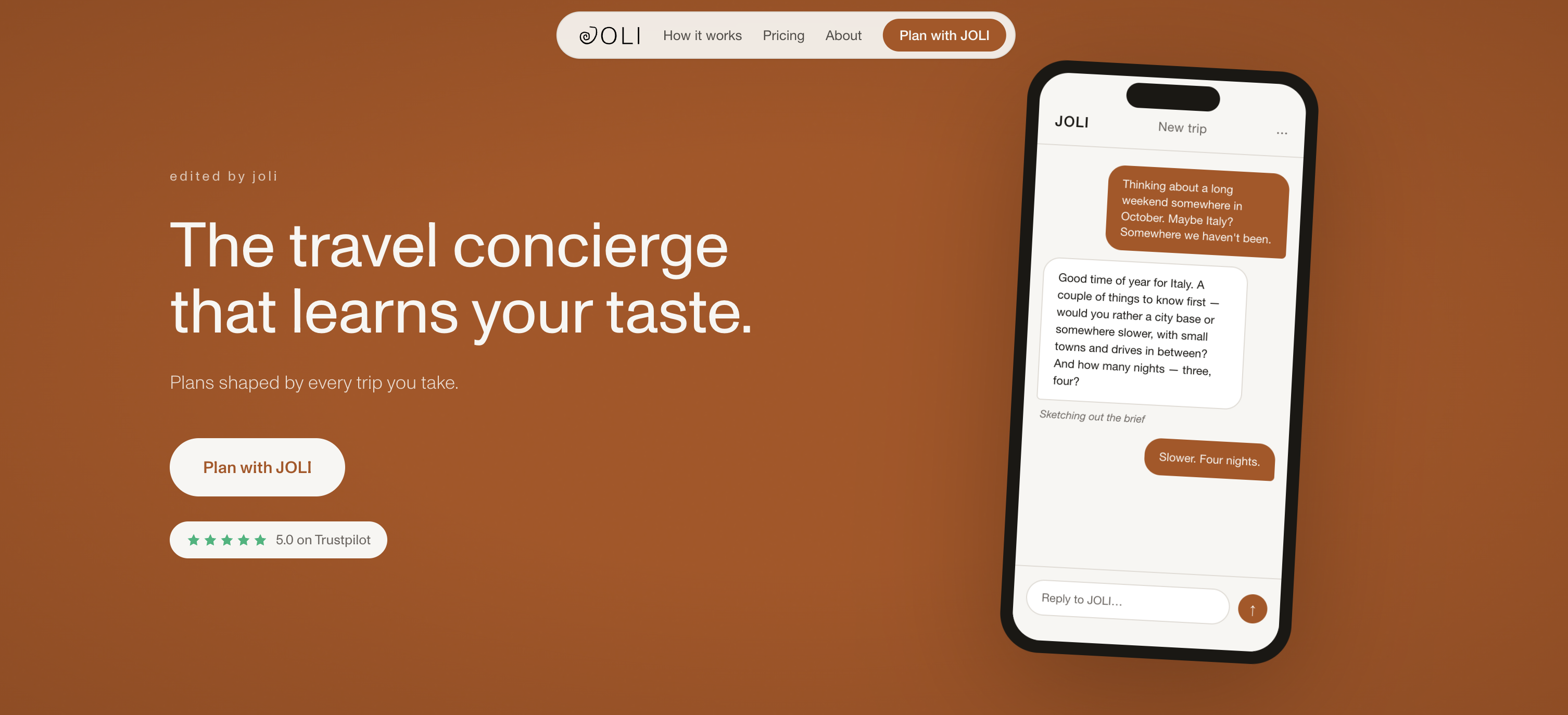
With new integrations from major players like Google and Anthropic dropping weekly, the potential is limitless. My approach is defined by agility: I learn by getting my hands on tools immediately, testing their fluency in real-world scenarios to decide if they earn a place in my stack. In a landscape filled with noise, the only way to find true signal is through constant, rapid experimentation.
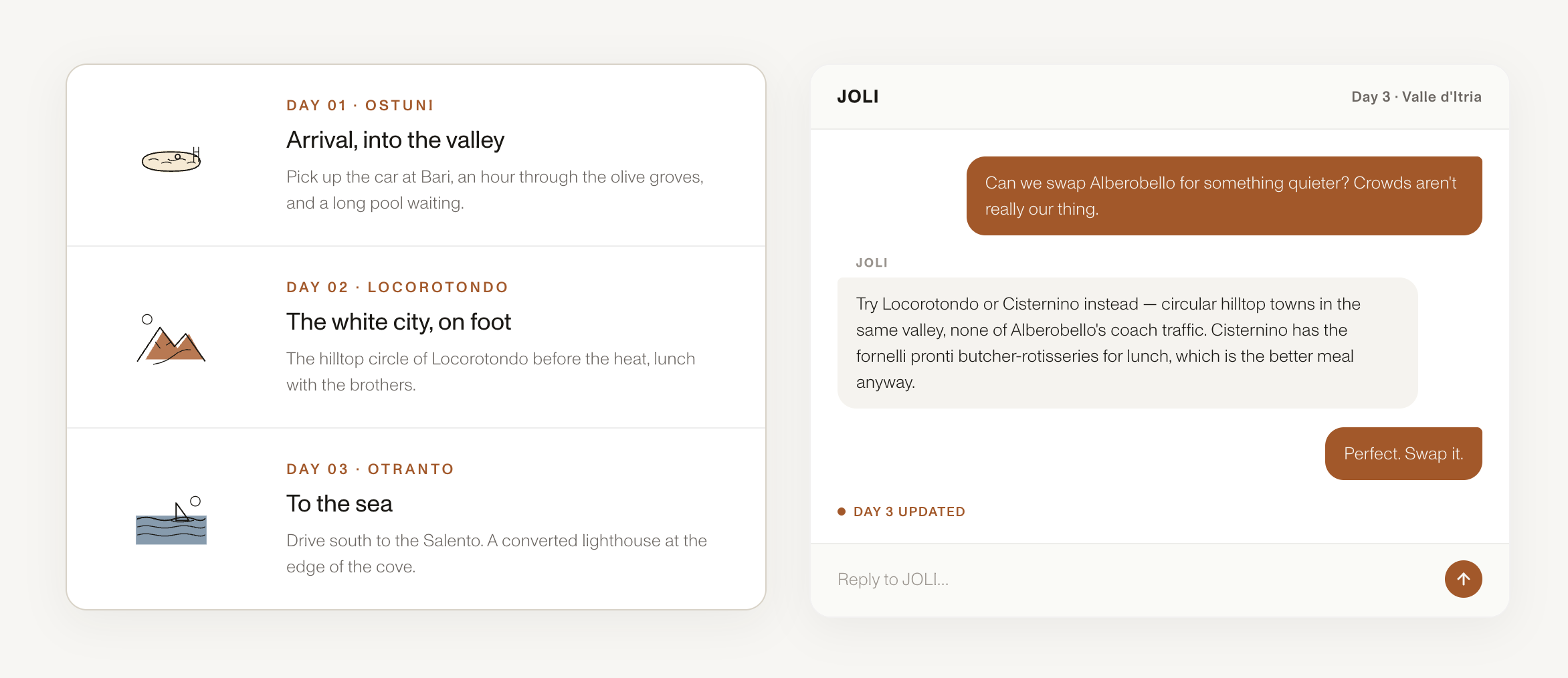
At the moment I'm focussed on simplifying context engineering in my personal set-up - ensuring an AI agent has the precise information required to make reliable decisions. I want to specialise in building systems where natural language is the primary interface; the user provides intent, and the architecture intelligently determines which tool to trigger and what context to retrieve. I'm driven to build the next generation of applications that bridge the gap between fragmented tools to create a seamless, invisible, and intent-driven user experience.